Complete Guide to Pre Roll Ads: Best Practices for Publishers & Ad Ops Teams
Pre roll advertising has become one of the most effective and lucrative ad formats for digital publishers, with video advertising spend expected to reach $78.5 billion by 2025. For publishers and ad operations professionals, understanding how to effectively implement and optimize pre roll ads can significantly impact revenue performance and user experience.
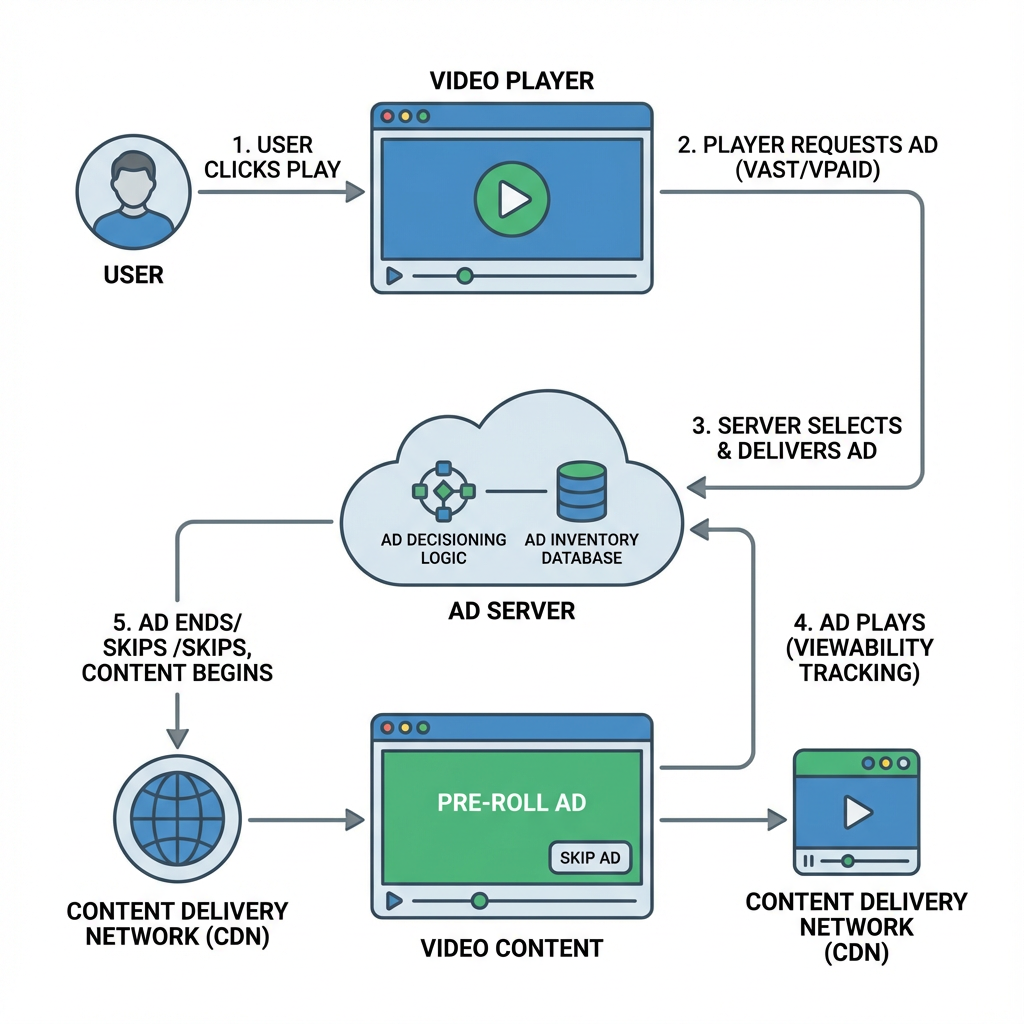
This comprehensive guide covers everything you need to know about pre roll advertising, from basic implementation to advanced optimization strategies that drive results.
What Are Pre Roll Ads?
Pre roll ads are short video advertisements that play before the main video content begins. These ads typically run for 15-30 seconds and appear across various digital platforms including websites, mobile apps, and streaming services. Unlike other ad formats, pre roll ads capture viewers’ full attention before they consume their desired content, making them highly effective for brand awareness and conversion campaigns.
The format has gained tremendous popularity among advertisers because it combines the visual impact of television advertising with the targeting precision of digital marketing. For publishers, pre roll ads offer higher CPMs compared to traditional display advertising, making them an attractive monetization option.
Types of Pre Roll Ad Formats
Skippable Pre Roll Ads
Skippable pre roll ads allow viewers to skip the advertisement after a predetermined time period, typically 5-6 seconds. While this might seem counterintuitive for advertisers, skippable ads often perform better in terms of user experience and completion rates among engaged viewers.
Benefits for publishers:
- Improved user experience reduces bounce rates
- Higher fill rates as advertisers prefer user-friendly formats
- Better long-term audience retention
Non-Skippable Pre Roll Ads
Non-skippable pre roll ads require viewers to watch the entire advertisement before accessing the main content. These ads are typically shorter (15-20 seconds) to minimize user frustration while ensuring complete message delivery.
Benefits for publishers:
- Higher CPMs due to guaranteed viewability
- Complete ad exposure increases advertiser satisfaction
- Better performance metrics for brand awareness campaigns
Bumper Ads
Bumper ads are ultra-short pre roll advertisements lasting 6 seconds or less. Originally popularized by YouTube, this format has gained traction across various video platforms due to its minimal impact on user experience.
Benefits for publishers:
- Minimal user disruption increases acceptance
- High completion rates improve performance metrics
- Suitable for mobile-first audiences with shorter attention spans
Implementation Best Practices for Publishers
Technical Setup and Infrastructure
Successful pre roll implementation requires robust technical infrastructure that can handle video ad delivery without compromising user experience. Publishers should ensure their video players support industry-standard protocols like VAST (Video Ad Serving Template) and VPAID (Video Player Ad Interface Definition).
Key technical considerations:
- Implement progressive loading to minimize buffering
- Ensure cross-device compatibility and responsive design
- Optimize video compression for various connection speeds
- Set up proper error handling and fallback mechanisms
Ad Server Integration
Proper ad server integration is crucial for maximizing fill rates and revenue. Publishers should work with multiple demand sources through header bidding or waterfall setups to ensure optimal ad delivery.
Integration checklist:
- Configure multiple ad networks and exchanges
- Implement real-time bidding capabilities
- Set up frequency capping to prevent ad fatigue
- Enable geographic and demographic targeting options
Video Player Optimization
The choice of video player significantly impacts pre roll ad performance. Publishers should select players that offer seamless ad integration, analytics capabilities, and customization options. Solutions like Veedmo provide comprehensive video player functionality specifically designed for publishers looking to maximize their video monetization efforts.
Player features to prioritize:
- Fast loading times and minimal buffering
- Comprehensive analytics and reporting
- Mobile optimization and touch-friendly controls
- Customizable branding and user interface options
Optimization Strategies for Maximum Revenue
Audience Segmentation and Targeting
Effective audience segmentation allows publishers to deliver more relevant ads, resulting in higher CPMs and better user engagement. By analyzing user behavior, demographics, and content preferences, publishers can create valuable audience segments for advertisers.
Segmentation strategies:
- Behavioral targeting based on content consumption patterns
- Geographic segmentation for location-based campaigns
- Device-based targeting for mobile vs. desktop optimization
- Time-based segmentation for dayparting strategies
A/B Testing and Performance Analysis
Continuous testing and optimization are essential for maximizing pre roll ad revenue. Publishers should regularly test different ad lengths, placement strategies, and player configurations to identify optimal setups.
Testing priorities:
- Ad length variations (15s vs. 30s vs. 6s bumpers)
- Skip button timing and placement
- Player size and positioning on the page
- Frequency capping thresholds
Content-Ad Alignment
Aligning ad content with video content improves user experience and advertiser performance. Publishers should work with ad partners to ensure relevant ad delivery based on content categories and audience interests.
Alignment strategies:
- Contextual targeting based on video content themes
- Mood-based matching for emotional relevance
- Seasonal campaign alignment with content calendars
- Brand safety measures to protect content integrity
Revenue Maximization Techniques
Header Bidding Implementation
Header bidding allows multiple demand sources to compete simultaneously for ad inventory, often resulting in higher CPMs and improved fill rates. For video advertising, implementing video header bidding can significantly boost revenue.
Implementation benefits:
- Increased competition drives higher prices
- Reduced latency compared to waterfall setups
- Better transparency and control over demand sources
- Improved user experience through faster ad loading
Private Marketplace Deals
Private marketplace (PMP) deals provide publishers with guaranteed revenue streams while offering advertisers premium inventory access. These direct relationships often result in higher CPMs and more consistent revenue.
PMP advantages:
- Premium pricing for quality inventory
- Guaranteed fill rates and revenue predictability
- Direct relationships with high-value advertisers
- Custom targeting and creative specifications
Dynamic Ad Insertion
Dynamic ad insertion allows publishers to update and optimize ad content in real-time, ensuring maximum relevance and performance. This technology is particularly valuable for live streaming and long-form video content.
Dynamic insertion benefits:
- Real-time optimization based on performance data
- Personalized ad experiences for different users
- Ability to update campaigns without content changes
- Improved measurement and attribution capabilities
Common Challenges and Solutions
Ad Blocking and User Resistance
Ad blocking presents a significant challenge for pre roll advertising, with some studies showing that up to 27% of internet users employ ad blockers. Publishers must balance monetization needs with user experience to minimize resistance.
Mitigation strategies:
- Implement non-intrusive ad policies
- Provide ad-free subscription options
- Use native advertising approaches
- Focus on high-quality, relevant ad content
Technical Issues and Latency
Technical problems like slow loading times, buffering, and compatibility issues can severely impact pre roll ad performance and user experience.
Technical solutions:
- Implement content delivery networks (CDNs)
- Optimize video compression and streaming protocols
- Regular testing across devices and browsers
- Backup ad serving solutions for reliability
Measurement and Attribution
Accurate measurement of pre roll ad performance requires sophisticated tracking and attribution systems that can handle complex user journeys across multiple devices and platforms.
Measurement improvements:
- Implement cross-device tracking solutions
- Use viewability measurement standards
- Set up conversion tracking and attribution modeling
- Regular auditing of measurement systems
Future Trends and Considerations
Interactive Pre Roll Advertising
Interactive pre roll ads that allow user engagement are becoming increasingly popular, offering higher engagement rates and better performance metrics.
AI-Powered Optimization
Artificial intelligence and machine learning are revolutionizing pre roll ad optimization, enabling real-time bidding decisions and personalized ad experiences.
Privacy-First Advertising
With increasing privacy regulations and the phase-out of third-party cookies, publishers must adapt their pre roll strategies to rely more on first-party data and privacy-compliant targeting methods.
Conclusion
Pre roll advertising represents a significant opportunity for publishers to maximize video monetization while maintaining positive user experiences. Success requires careful attention to technical implementation, continuous optimization, and strategic partnerships with demand sources.
By following the best practices outlined in this guide, publishers can build sustainable pre roll advertising operations that drive revenue growth while serving their audiences effectively. The key is balancing monetization objectives with user experience, ensuring long-term success in an increasingly competitive digital advertising landscape.
As the video advertising ecosystem continues to evolve, publishers who invest in proper infrastructure, optimization capabilities, and audience understanding will be best positioned to capitalize on the growing pre roll advertising opportunity.