FAST Channel Platforms: The Complete Guide for Publishers and Ad Ops Teams
Free Ad-Supported Television (FAST) channels have emerged as one of the most significant opportunities in the streaming landscape, offering publishers a way to monetize content through advertising while providing viewers with free access to programming. As cord-cutting accelerates and streaming consumption grows, FAST channel platforms have become essential infrastructure for content creators, publishers, and advertisers alike.
Understanding FAST Channel Platforms
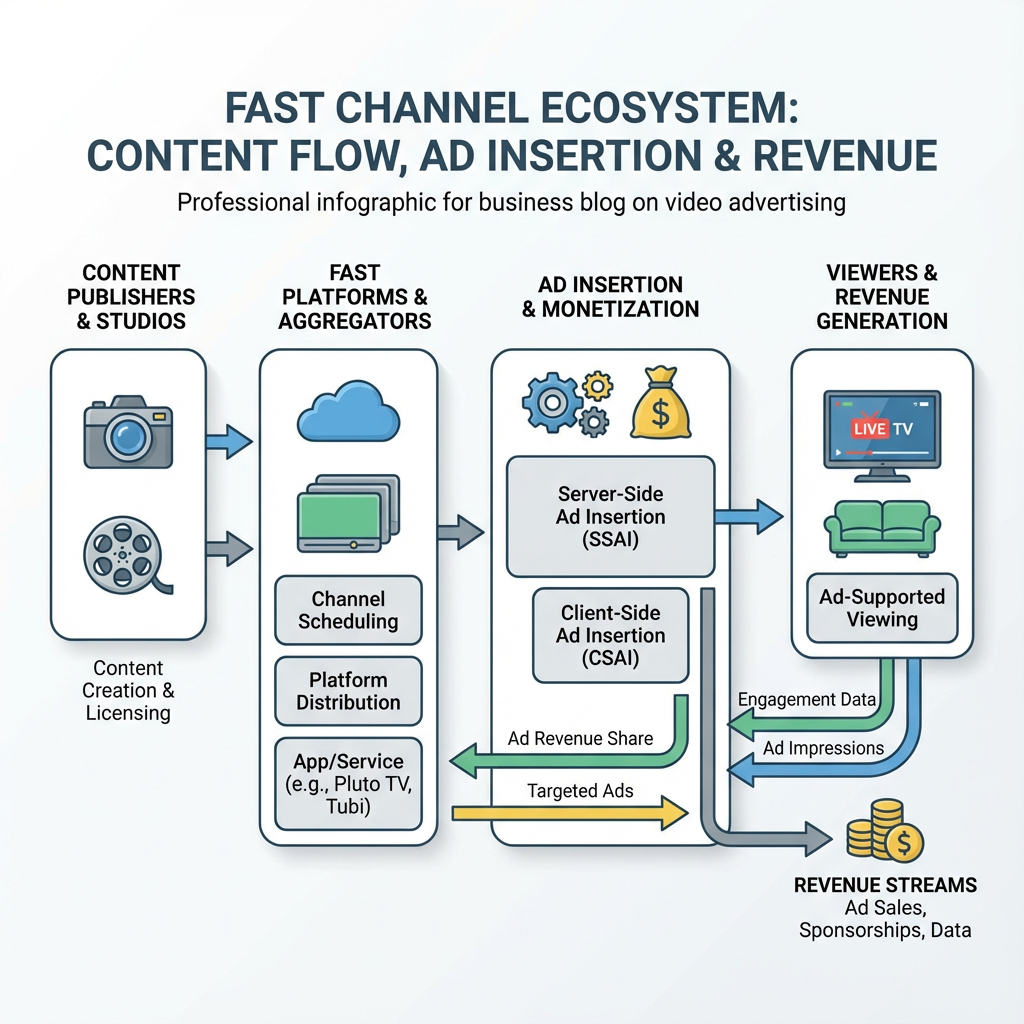
FAST channel platforms serve as the technological backbone that enables publishers to create, distribute, and monetize linear streaming channels without subscription fees. These platforms handle everything from content ingestion and playlist management to ad insertion and analytics, creating a comprehensive ecosystem for free streaming television.
Unlike traditional broadcast television or subscription streaming services, FAST channels operate on an advertising-supported model similar to traditional TV, but with the targeting capabilities and measurement precision of digital advertising. This hybrid approach has attracted both traditional broadcasters looking to expand their digital presence and digital-first publishers seeking new revenue streams.
Key Components of FAST Channel Infrastructure
FAST channel platforms typically include several core components that work together to deliver a seamless viewing experience:
Content Management Systems: These handle video ingestion, transcoding, and playlist creation, allowing publishers to build linear programming schedules from their content libraries.
Ad Insertion Technology: Server-side ad insertion (SSAI) capabilities that seamlessly integrate advertisements into the content stream, maintaining broadcast-quality transitions.
Distribution Networks: Integration with major streaming platforms and connected TV (CTV) environments to maximize reach and accessibility.
Analytics and Reporting: Comprehensive measurement tools that provide insights into viewership, ad performance, and revenue optimization opportunities.
Major FAST Channel Platform Providers
Samsung TV Plus and Platform Integration
Samsung TV Plus represents one of the largest FAST channel ecosystems, pre-installed on millions of Samsung smart TVs worldwide. The platform offers publishers access to a massive viewer base without requiring app downloads or additional user acquisition efforts. Publishers can integrate their channels through Samsung’s content management system, which handles technical requirements like adaptive bitrate streaming and regional content restrictions.
For ad ops teams, Samsung TV Plus provides detailed analytics on viewer engagement and ad performance, enabling optimization of both content programming and advertising strategies. The platform supports various ad formats including traditional pre-roll and mid-roll placements, as well as more innovative interactive ad experiences.
Pluto TV’s Publisher Program
Pluto TV, owned by Paramount, operates both as a direct-to-consumer streaming service and as a platform for third-party publishers. Their publisher program allows content creators to launch branded channels within the Pluto TV ecosystem, benefiting from the service’s established user base and sophisticated ad serving infrastructure.
The platform’s strength lies in its content discovery algorithms and user interface design, which help drive viewership to publisher channels. Ad ops professionals particularly value Pluto TV’s integration with Paramount’s advertising sales team, which can help monetize inventory through premium brand campaigns.
Roku Channel Platform
Roku’s advertising-supported channel offerings provide publishers with access to one of the largest streaming audiences in North America. The Roku Channel Platform enables publishers to create both on-demand and linear streaming experiences, with robust support for programmatic advertising integration.
Roku’s platform stands out for its advanced audience targeting capabilities, leveraging first-party data from the Roku operating system to enable precise demographic and behavioral targeting. This data richness makes Roku channels particularly attractive to advertisers seeking specific audience segments.
Tubi and Fox’s FAST Strategy
Tubi, acquired by Fox, has expanded beyond its on-demand roots to include FAST channel offerings. The platform provides publishers with tools to create themed linear channels from existing content libraries, supported by Fox’s advertising sales infrastructure and relationships with major brands.
Tubi’s approach emphasizes content curation and niche audience targeting, making it an excellent platform for publishers with specialized content that appeals to specific demographics or interest groups.
Technical Implementation for Publishers
Content Preparation and Ingestion
Successful FAST channel implementation begins with proper content preparation. Publishers must ensure their video assets meet platform-specific technical requirements, including resolution standards, audio specifications, and closed captioning compliance.
Most FAST platforms require content to be delivered in specific formats, typically MP4 with H.264 video encoding and AAC audio encoding. Publishers should also prepare multiple bitrate versions to support adaptive streaming across different connection speeds and device capabilities.
Content metadata plays a crucial role in discoverability and programming. Publishers should provide comprehensive metadata including genre classifications, content ratings, episode information, and promotional assets to maximize their content’s visibility within platform interfaces.
Ad Serving Integration
FAST channel platforms typically support multiple ad serving approaches, from platform-managed advertising to publisher-controlled inventory. Understanding these options is crucial for maximizing revenue potential.
Platform-Managed Advertising: Many FAST platforms offer fully managed advertising solutions where the platform handles ad sales, trafficking, and optimization. While this reduces operational complexity, it typically results in lower revenue shares for publishers.
Publisher-Controlled Inventory: More sophisticated publishers often prefer to maintain control over their advertising inventory, integrating their existing ad servers with FAST platform ad insertion capabilities. This approach requires more technical resources but can significantly increase revenue potential.
Hybrid Approaches: Some platforms support hybrid models where publishers can sell premium inventory directly while allowing the platform to fill unsold inventory through their managed advertising programs.
Video Player Integration and Optimization
While FAST platforms typically provide their own video player infrastructure, publishers may need to integrate additional video player solutions for cross-platform consistency and enhanced functionality. Solutions like Veedmo can provide publishers with advanced video player capabilities that complement FAST channel offerings across different distribution channels.
Optimizing video player performance is crucial for maintaining viewer engagement and ad completion rates. Publishers should focus on minimizing startup times, ensuring smooth ad transitions, and providing consistent user experiences across different devices and connection speeds.
Monetization Strategies and Revenue Optimization
Understanding FAST Channel Economics
FAST channel monetization operates on fundamentally different economics than traditional digital video advertising. Revenue is typically generated through a combination of advertising impressions and time-based engagement metrics, making content programming and audience retention crucial factors in financial success.
Successful FAST channels typically achieve higher revenue per user than on-demand video content due to increased viewing duration and ad load opportunities. However, this requires careful balance between ad frequency and viewer satisfaction to maintain audience engagement.
Programmatic Advertising Integration
Modern FAST channel platforms increasingly support programmatic advertising integration, allowing publishers to access demand-side platforms (DSPs) and private marketplace (PMP) deals. This integration can significantly increase revenue potential by enabling real-time bidding for ad inventory.
Publishers should work with their ad ops teams to establish appropriate floor prices and yield optimization strategies that maximize revenue while maintaining advertiser demand. Understanding audience demographics and viewing patterns helps optimize programmatic setup for better targeting and higher CPMs.
Ad Pod Strategy and Optimization
FAST channels typically use ad pod structures similar to traditional television, with multiple advertisements grouped together at natural content breaks. Optimizing ad pod composition and frequency requires careful analysis of viewer behavior and content flow.
Effective ad pod strategies consider factors like content genre, viewer demographics, and viewing context. For example, news-focused FAST channels might support shorter, more frequent ad breaks, while movie channels might use longer, less frequent ad pods to maintain narrative flow.
Platform Selection and Strategy Development
Evaluating Platform Fit
Choosing the right FAST channel platform requires careful consideration of multiple factors including audience demographics, content genre, technical capabilities, and revenue sharing models. Publishers should evaluate platforms based on their specific content strategy and business objectives.
Audience alignment represents perhaps the most critical factor in platform selection. Publishers should analyze platform viewership data to ensure their content matches viewer preferences and demographic profiles. A mismatch between content and audience can result in poor engagement and limited monetization potential.
Multi-Platform Distribution Strategies
Many successful publishers adopt multi-platform FAST channel strategies, distributing the same or similar content across multiple platforms to maximize reach and revenue. However, this approach requires careful consideration of platform-specific requirements and potential content exclusivity restrictions.
Publishers should develop platform-specific optimization strategies that account for differences in user interface design, content discovery algorithms, and audience behavior patterns. What works on Samsung TV Plus may not be optimal for Roku Channel Platform due to fundamental differences in user experience and viewing patterns.
Performance Measurement and Optimization
Successful FAST channel operations require continuous performance monitoring and optimization. Publishers should establish key performance indicators (KPIs) that align with their business objectives and platform capabilities.
Important metrics include average viewing duration, ad completion rates, audience retention, and revenue per viewer. Publishers should also monitor content performance to identify which programming strategies drive the highest engagement and revenue generation.
Future Trends and Industry Evolution
Technological Advancements
The FAST channel landscape continues to evolve rapidly, with new technological capabilities emerging regularly. Artificial intelligence and machine learning are increasingly being integrated into content programming and ad optimization, enabling more sophisticated audience targeting and personalization.
Interactive advertising formats are also gaining traction within FAST channel environments, offering new engagement opportunities and revenue potential for publishers willing to experiment with innovative ad experiences.
Market Consolidation and Competition
As the FAST channel market matures, we’re seeing increased consolidation among platform providers and more sophisticated competition for premium content. Publishers should anticipate continued evolution in platform offerings and revenue sharing models as the market develops.
The entry of major technology companies and traditional media conglomerates into the FAST channel space is creating new opportunities and challenges for independent publishers. Understanding these competitive dynamics is crucial for developing sustainable long-term strategies.
Regulatory and Privacy Considerations
Evolving privacy regulations and data protection requirements are impacting FAST channel operations, particularly around audience targeting and measurement. Publishers should work closely with their legal and compliance teams to ensure their FAST channel strategies remain compliant with relevant regulations.
The deprecation of third-party cookies and evolution toward privacy-first advertising technologies will likely impact FAST channel monetization strategies, making first-party data collection and audience relationship building increasingly important.
Conclusion
FAST channel platforms represent a significant opportunity for publishers to expand their reach and diversify revenue streams in the evolving streaming landscape. Success requires careful platform selection, technical implementation, and ongoing optimization based on performance data and industry trends.
Publishers entering the FAST channel space should focus on understanding their audience, optimizing content programming for linear viewing experiences, and developing sophisticated advertising strategies that balance revenue generation with viewer satisfaction. As the market continues to evolve, those who can adapt quickly to new technologies and changing viewer preferences will be best positioned for long-term success.
The integration of FAST channels into broader content and advertising strategies can provide publishers with valuable diversification and growth opportunities, but success requires dedicated resources and strategic thinking about content programming, audience development, and monetization optimization.