FAST Channels Streaming: Complete Guide for Publishers in 2024
Free Ad-Supported Television (FAST) channels have emerged as a dominant force in the streaming landscape, fundamentally changing how publishers monetize video content. As cord-cutting accelerates and viewers embrace streaming platforms, FAST channels offer a compelling alternative that combines the accessibility of free content with robust advertising revenue opportunities.
What Are FAST Channels and Why They Matter
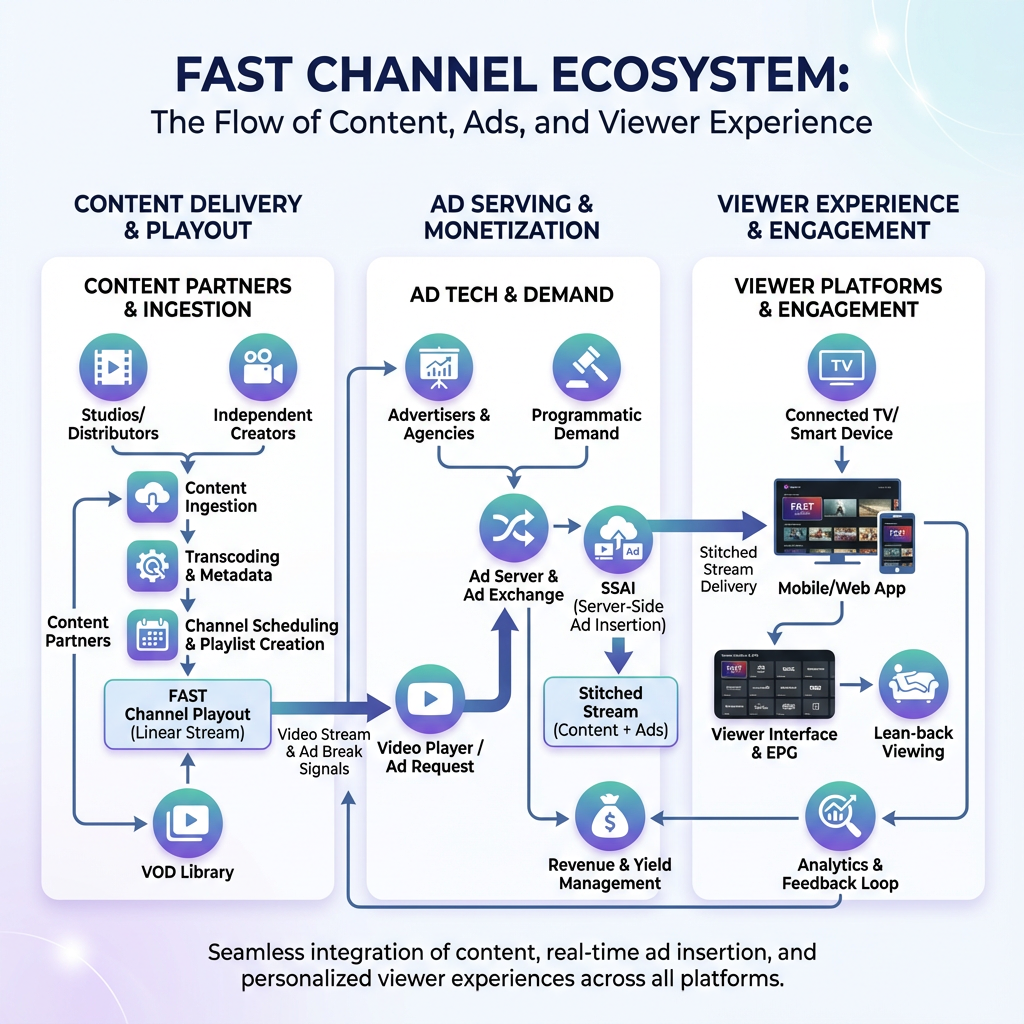
Understanding FAST Channel Architecture
FAST channels are linear streaming channels that broadcast pre-programmed content 24/7, similar to traditional television but delivered over the internet. Unlike on-demand streaming services, FAST channels create appointment viewing experiences where all viewers watch the same content simultaneously.
The key characteristics of FAST channels include:
- Linear programming: Content streams continuously in predetermined schedules
- Ad-supported model: Revenue generated through advertising rather than subscriptions
- Free access: No paywalls or subscription requirements for viewers
- Programmatic integration: Advanced ad serving capabilities using real-time bidding
For publishers, FAST channels represent a significant monetization opportunity. Unlike traditional on-demand video, linear streaming allows for predictable ad inventory and higher fill rates, often resulting in improved revenue per viewer.
Market Growth and Opportunity
The FAST channel ecosystem has experienced explosive growth, with platforms like Pluto TV, Tubi, and The Roku Channel leading the charge. Industry data shows that FAST viewership increased by over 40% in 2023, driven by economic pressures on consumers and advertiser demand for premium connected TV (CTV) inventory.
Publishers entering the FAST space can capitalize on several trends:
- Cord-cutting acceleration: Traditional TV viewership continues declining
- Ad-supported preference: Consumers increasingly choose free, ad-supported options over paid subscriptions
- Premium inventory demand: Advertisers seek high-quality CTV placements as alternatives to traditional TV
Technical Implementation of FAST Channels
Content Delivery and Streaming Infrastructure
Implementing FAST channels requires robust technical infrastructure capable of handling linear streaming at scale. The core components include:
Video Encoding and Transcoding Content must be encoded into multiple bitrates and formats to ensure optimal playback across devices. Adaptive bitrate streaming (ABR) is essential for maintaining quality while accommodating varying network conditions.
Content Delivery Networks (CDNs) Linear streaming demands reliable, low-latency content delivery. Publishers typically leverage multiple CDNs to ensure global reach and redundancy. Unlike on-demand content, FAST channels cannot rely on pre-caching, making real-time delivery capabilities crucial.
Electronic Program Guides (EPGs) FAST channels require EPG data to inform viewers about current and upcoming programming. This metadata integration is essential for discoverability and user experience optimization.
Ad Serving Integration
FAST channels present unique ad serving challenges and opportunities compared to on-demand video. The linear nature creates predictable ad break timing while requiring sophisticated server-side ad insertion (SSAI) capabilities.
Server-Side Ad Insertion (SSAI) SSAI technology seamlessly integrates advertisements into the linear stream, preventing ad blockers and creating television-like viewing experiences. Key SSAI considerations for FAST channels include:
- Low latency requirements: Ad decisioning must occur within milliseconds
- Stream continuity: Seamless transitions between content and advertisements
- Personalization capabilities: Delivering targeted ads while maintaining linear experience
VMAP Implementation Video Multiple Ad Playlist (VMAP) specifications become crucial for FAST channels, defining when and how ads appear within the linear stream. Publishers must carefully structure VMAP responses to optimize both user experience and revenue.
For publishers seeking comprehensive video solutions, platforms like Veedmo offer integrated ad serving capabilities that can streamline FAST channel implementation while maximizing monetization potential.
Programmatic Advertising in FAST Channels
Real-Time Bidding Integration
FAST channels have revolutionized programmatic advertising in streaming video by creating predictable, television-like inventory that appeals to brand advertisers. The linear nature enables advanced programmatic strategies:
Header Bidding for CTV Header bidding implementation in FAST channels allows multiple demand sources to compete simultaneously for ad inventory. This server-side header bidding approach is particularly effective because:
- Reduced latency: Server-side processing prevents delays in linear streams
- Increased competition: Multiple demand partners drive up CPMs
- Inventory optimization: Real-time decisioning maximizes revenue per impression
Private Marketplace (PMP) Opportunities FAST channels often generate premium inventory suitable for private marketplace deals. Publishers can package linear inventory with guaranteed viewability and brand-safe environments, commanding higher CPMs than traditional programmatic channels.
Advanced Targeting Capabilities
While maintaining the linear viewing experience, FAST channels support sophisticated audience targeting:
Household-Level Targeting CTV advertising enables household-level targeting using first-party data and identity graphs. Publishers can offer advertisers precise demographic and behavioral targeting while preserving the appointment viewing experience.
Contextual Advertising Content context becomes particularly valuable in FAST channels, where advertisers can align their messages with specific programming themes or genres. This contextual relevance often drives higher engagement rates and advertiser satisfaction.
Revenue Optimization Strategies
Ad Pod Configuration
Optimizing ad pod structure is crucial for FAST channel monetization. Unlike on-demand video where ad pods can be dynamically adjusted, linear streaming requires careful pre-planning:
Pod Density and Frequency Balancing ad load with viewer experience requires testing different configurations:
- Standard pods: 3-4 minutes every 15-20 minutes of content
- Micro-pods: Shorter, more frequent ad breaks for specific content types
- Sponsorship integration: Branded content segments that blur advertising lines
Competitive Separation Linear streaming allows for sophisticated competitive separation rules, ensuring competing brands don’t appear in adjacent positions within the same viewing session.
Cross-Platform Distribution
Maximizing FAST channel reach requires multi-platform distribution strategies:
OEM Integration Smart TV manufacturers increasingly prioritize FAST channels in their platform strategies. Publishers should pursue integration with major OEMs like Samsung, LG, and Roku to maximize reach.
Aggregator Relationships Partnering with FAST aggregators and distributors can accelerate market entry while providing access to established viewer bases.
Content Strategy for FAST Channels
Programming Optimization
Successful FAST channels require strategic content curation that balances viewer engagement with advertiser requirements:
Genre-Specific Channels Niche programming often outperforms broad-appeal content in FAST environments. Specialized channels can command premium advertising rates from relevant brands while building dedicated audiences.
Content Refresh Strategies Linear streaming requires careful content rotation to maintain viewer interest while managing licensing costs. Publishers must balance fresh content with proven performers.
Audience Development
Building sustainable viewership for FAST channels requires different strategies than on-demand content:
Appointment Viewing Creating appointment viewing habits through consistent scheduling and promotional strategies helps build regular audiences that advertisers value.
Cross-Promotion Opportunities Leveraging owned-and-operated properties to promote FAST channels can accelerate audience development while maximizing existing traffic value.
Measurement and Analytics
Performance Metrics
FAST channel success requires monitoring unique metrics that blend traditional TV and digital video measurement:
Viewing Duration and Retention Linear viewing enables session-based analytics that provide insights into content performance and optimal ad placement timing.
Ad Completion Rates Unlike skippable pre-roll advertising, FAST channel ads typically achieve higher completion rates, making viewability and completion rate optimization crucial for revenue maximization.
Attribution and Measurement
Advanced measurement capabilities distinguish FAST channels from traditional television:
Cross-Device Tracking CTV advertising enables sophisticated attribution modeling that connects FAST channel exposure to conversion actions across devices.
Real-Time Analytics Digital delivery provides immediate performance feedback, enabling rapid optimization of both content and advertising strategies.
Technical Challenges and Solutions
Latency Management
Linear streaming presents unique latency challenges that can impact both viewer experience and ad serving:
Stream Synchronization Maintaining synchronized streams across multiple CDNs while inserting targeted advertisements requires sophisticated orchestration systems.
Ad Serving Latency Programmatic ad decisioning must occur within strict latency budgets to prevent stream interruption or quality degradation.
Scalability Considerations
FAST channels must be designed for scale from inception:
Concurrent Viewer Management Linear streaming can generate sudden traffic spikes during popular programming, requiring elastic infrastructure capable of handling demand fluctuations.
Global Distribution International expansion requires consideration of regional ad serving requirements, content licensing restrictions, and local advertising demand.
Future Trends and Opportunities
Interactive Advertising Evolution
FAST channels are beginning to incorporate interactive advertising elements that blend linear and on-demand experiences:
Shoppable TV Integration Advanced CTV platforms enable direct commerce integration within linear streams, creating new revenue opportunities beyond traditional advertising.
Second-Screen Experiences Synchronized second-screen content can enhance both viewer engagement and advertising effectiveness while maintaining the linear viewing experience.
Technology Advancement
AI-Driven Content Optimization Machine learning algorithms increasingly optimize FAST channel programming schedules based on viewership patterns and advertiser requirements.
Advanced Personalization While maintaining linear experiences, technology developments enable more sophisticated personalization of both content recommendations and advertising.
Implementation Best Practices
Successful FAST channel deployment requires careful attention to technical and business considerations:
Technical Prerequisites
- Robust CDN infrastructure with global reach
- Advanced SSAI capabilities with low-latency ad insertion
- Comprehensive analytics and reporting systems
- Scalable content management and scheduling systems
Business Strategy Essentials
- Clear content strategy with sustainable programming costs
- Diversified revenue streams beyond traditional display advertising
- Strategic distribution partnerships for maximum reach
- Performance measurement frameworks aligned with business objectives
FAST channels represent a significant opportunity for publishers willing to invest in the necessary technical infrastructure and content strategy. As the streaming landscape continues evolving, early adoption of FAST channel strategies can provide sustainable competitive advantages while generating substantial advertising revenue.
The combination of linear viewing experiences with digital advertising sophistication creates unique value propositions for both viewers and advertisers. Publishers who successfully navigate the technical complexities while developing compelling content strategies will find FAST channels to be powerful additions to their monetization portfolios.