Streaming Monetization: Complete Guide to Revenue Optimization for Publishers
The streaming industry has fundamentally transformed how audiences consume content, with over 1.7 billion people worldwide now subscribing to video streaming services. For publishers and ad ops professionals, this shift represents both unprecedented opportunities and complex monetization challenges. Understanding how to effectively monetize streaming content has become critical for sustainable revenue growth.
Understanding the Streaming Monetization Landscape
Streaming monetization encompasses multiple revenue models and technical implementations that publishers must master to maximize their content’s earning potential. The landscape includes traditional advertising models adapted for streaming, subscription-based approaches, and hybrid monetization strategies that combine multiple revenue streams.
Key Revenue Models in Streaming
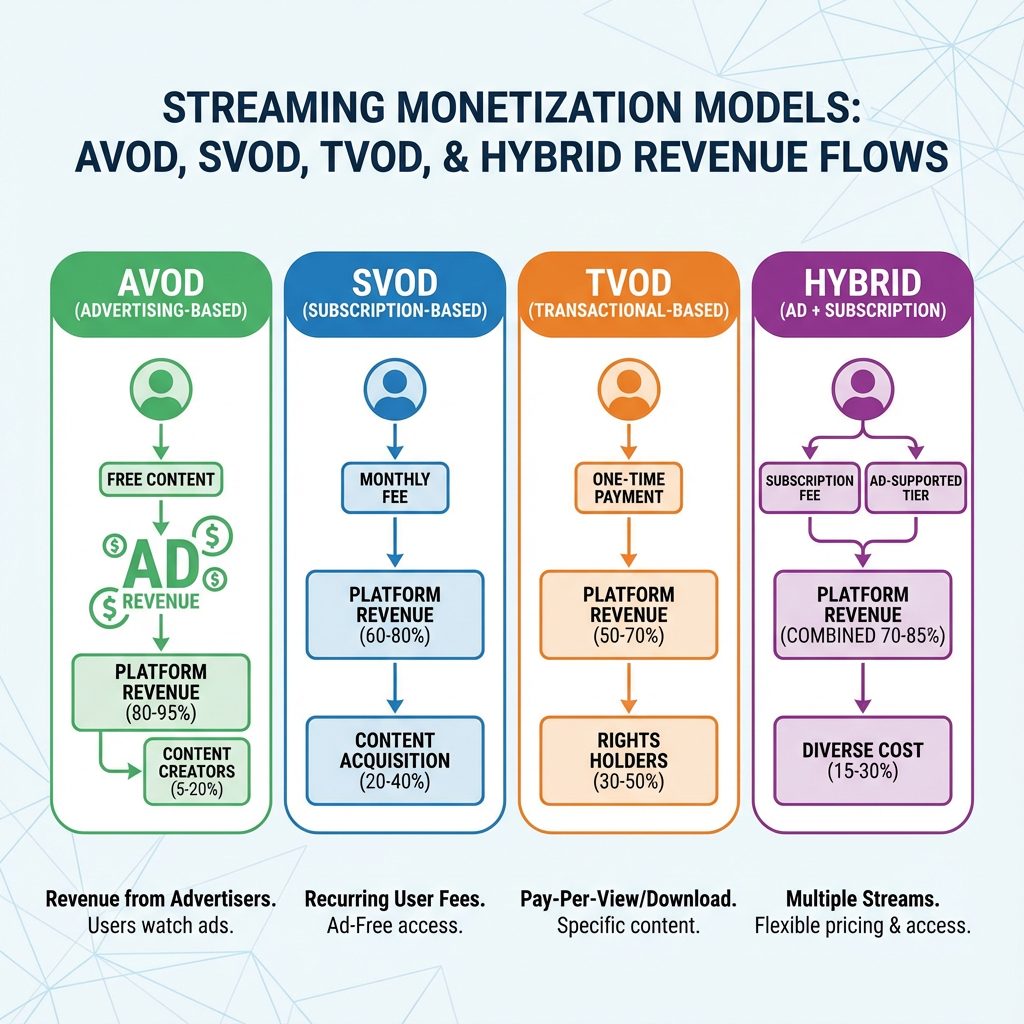
Publishers today have access to several primary monetization approaches, each with distinct advantages and implementation requirements:
Advertising Video-on-Demand (AVOD) remains the most accessible model for publishers, offering free content to viewers while generating revenue through ad placements. This approach requires sophisticated ad serving capabilities and careful balance between user experience and revenue optimization.
Subscription Video-on-Demand (SVOD) provides predictable recurring revenue but demands high-quality content libraries and effective churn reduction strategies. Publishers must demonstrate clear value propositions to justify subscription costs.
Transactional Video-on-Demand (TVOD) allows monetization of premium content through pay-per-view or rental models, particularly effective for live events, new releases, or specialized content.
Hybrid models combine multiple approaches, such as freemium tiers with ad-supported free content and premium ad-free subscriptions, maximizing revenue potential across different audience segments.
Technical Infrastructure for Streaming Monetization
Ad Serving Technologies
Effective streaming monetization requires robust technical infrastructure capable of delivering seamless ad experiences. Modern streaming platforms must support multiple ad serving standards and protocols to maximize revenue opportunities.
Video Ad Serving Template (VAST) integration ensures compatibility with programmatic advertising ecosystems, enabling access to diverse demand sources and automated ad placement optimization.
Video Multiple Ad Playlist (VMAP) implementation allows publishers to define ad break scheduling across content, optimizing viewer experience while maximizing ad inventory value.
Programmatic Integration
Programmatic advertising has become essential for streaming monetization, enabling real-time bidding and automated ad placement optimization. Publishers must implement header bidding solutions specifically designed for video content to maximize competition among demand sources.
Real-time bidding (RTB) integration allows publishers to auction ad inventory to multiple buyers simultaneously, typically increasing revenue by 20-40% compared to direct sales alone. However, successful implementation requires careful latency management to prevent viewer experience degradation.
Content Delivery Optimization
Streaming monetization success depends heavily on content delivery performance. Publishers must implement adaptive bitrate streaming to ensure consistent playback quality across different devices and network conditions. Poor streaming performance directly impacts both viewer retention and ad completion rates.
Content Delivery Networks (CDNs) with edge caching capabilities reduce buffering and improve ad load times, directly correlating with higher ad completion rates and revenue performance.
Connected TV (CTV) Monetization Strategies
The CTV Revolution
Connected TV represents the fastest-growing segment in streaming monetization, with CTV ad spending projected to reach $40 billion by 2025. Publishers must adapt their monetization strategies to capitalize on this premium advertising environment.
CTV audiences typically demonstrate higher engagement rates and purchasing intent compared to mobile or desktop viewers, making CTV inventory particularly valuable to advertisers. Publishers can command premium CPMs by offering high-quality CTV ad experiences.
CTV-Specific Implementation Considerations
CTV monetization requires specialized technical approaches different from traditional web-based video advertising. Publishers must ensure their video players support CTV-specific ad formats and interactive capabilities.
Ad pod optimization becomes crucial in CTV environments, where viewers expect television-like commercial break experiences. Publishers should implement dynamic ad pod length adjustment based on content duration and viewer engagement patterns.
Cross-Device Campaign Coordination
Successful CTV monetization often involves coordinating campaigns across multiple devices and platforms. Publishers who can offer unified audience targeting across CTV, mobile, and desktop typically achieve higher advertiser demand and premium pricing.
Fast Channel Development and Monetization
Free Ad-Supported Streaming TV (FAST) Opportunities
FAST channels represent significant monetization opportunities for publishers with extensive content libraries. These linear-style streaming channels combine the familiarity of traditional television with modern programmatic advertising capabilities.
FAST channel development allows publishers to repurpose existing content into themed linear channels, creating new advertising inventory without additional content production costs. Successful FAST channels typically focus on specific niches or genres that attract engaged, targetable audiences.
FAST Channel Technical Requirements
Implementing FAST channels requires specialized streaming infrastructure capable of maintaining continuous linear broadcasts while supporting dynamic ad insertion. Publishers must invest in server-side ad insertion (SSAI) capabilities to deliver seamless ad experiences that match traditional television quality.
Content scheduling algorithms become crucial for FAST success, as publishers must balance viewer preferences, advertiser requirements, and content availability to maintain consistent audience engagement.
Advanced Monetization Techniques
Pre-Roll and Mid-Roll Optimization
Strategic ad placement significantly impacts both viewer experience and revenue generation. Pre-roll advertisements typically achieve higher completion rates but may increase content abandonment if not properly optimized.
Mid-roll placement requires careful content analysis to identify natural break points that minimize viewer disruption. Publishers should implement content recognition technologies to automatically identify optimal mid-roll positions based on scene changes, dialogue pauses, and narrative structure.
Interactive Advertising Integration
Interactive ad formats offer enhanced engagement opportunities and premium pricing potential. Publishers can implement clickable overlays, product showcases, and viewer polls to increase advertiser value while maintaining viewer engagement.
Shoppable video advertisements represent particularly lucrative opportunities, allowing viewers to purchase featured products directly within the streaming experience. However, implementation requires careful user interface design to prevent disruption of content consumption.
Real-Time Audience Segmentation
Advanced streaming monetization leverages real-time audience data to optimize ad targeting and pricing dynamically. Publishers should implement audience segmentation capabilities that analyze viewing behavior, content preferences, and engagement patterns to create valuable advertiser targeting options.
Contextual targeting based on content categories, viewing time, and device type enables publishers to offer premium advertising placements that justify higher CPMs while maintaining relevance for viewers.
Revenue Optimization Strategies
Yield Management Implementation
Effective streaming monetization requires sophisticated yield management strategies that balance direct sales, programmatic advertising, and promotional content to maximize overall revenue.
Publishers should implement dynamic floor pricing that adjusts based on audience quality, content popularity, and market demand. Historical performance data enables predictive pricing models that optimize revenue while maintaining competitive fill rates.
Multi-Format Ad Support
Diversifying ad format support increases revenue opportunities by accommodating different advertiser preferences and campaign objectives. Publishers should ensure their streaming infrastructure supports display overlays, video pre-roll, mid-roll, post-roll, and interactive formats.
Native advertising integration within streaming content offers premium monetization opportunities while maintaining viewer experience quality. However, publishers must carefully balance native ad frequency to prevent audience alienation.
Performance Analytics Integration
Comprehensive analytics implementation enables data-driven monetization optimization. Publishers must track viewer engagement metrics, ad completion rates, revenue per viewer, and audience retention to identify optimization opportunities.
Real-time reporting capabilities allow publishers to adjust monetization strategies based on immediate performance feedback, maximizing revenue potential during peak viewing periods.
Implementation Best Practices
Technical Integration Guidelines
Successful streaming monetization requires careful technical planning and implementation. Publishers should prioritize video player solutions that offer comprehensive ad serving capabilities, analytics integration, and cross-platform compatibility. For instance, solutions like Veedmo provide publishers with robust video player functionality specifically designed for optimal monetization performance.
Latency optimization remains crucial for maintaining viewer experience while supporting complex ad serving requirements. Publishers should implement progressive loading techniques and predictive caching to minimize buffering during ad transitions.
Quality Assurance Protocols
Regular testing across different devices, browsers, and network conditions ensures consistent monetization performance. Publishers should implement automated testing protocols that verify ad serving functionality, tracking accuracy, and viewer experience quality.
A/B testing of different ad placement strategies, formats, and frequency caps enables data-driven optimization of monetization approaches while maintaining viewer satisfaction.
Future Trends and Opportunities
Emerging Technologies
Artificial intelligence and machine learning integration offer significant opportunities for streaming monetization optimization. Predictive algorithms can optimize ad placement timing, format selection, and audience targeting to maximize revenue while minimizing viewer disruption.
Blockchain technology may revolutionize streaming monetization through improved transparency, fraud prevention, and direct creator compensation models.
Market Evolution
The streaming monetization landscape continues evolving rapidly, with new opportunities emerging in virtual reality, augmented reality, and interactive content experiences. Publishers who invest in flexible, scalable monetization infrastructure will be best positioned to capitalize on future opportunities.
Regulatory changes around privacy and data protection will continue impacting streaming monetization strategies, requiring publishers to develop privacy-compliant targeting and measurement approaches.
Conclusion
Streaming monetization success requires comprehensive understanding of technical implementation, audience behavior, and market dynamics. Publishers who invest in robust infrastructure, implement data-driven optimization strategies, and maintain focus on viewer experience quality will achieve sustainable revenue growth in the competitive streaming landscape.
The key to long-term success lies in balancing multiple revenue streams, embracing new technologies, and continuously optimizing based on performance data and market feedback. As the streaming industry continues evolving, publishers must remain adaptable while maintaining focus on fundamental monetization principles.