Instream Ads: The Complete Guide for Publishers to Maximize Video Revenue
Instream video advertising represents one of the most lucrative monetization opportunities for publishers today. With video consumption continuing to surge across all digital platforms, understanding how to effectively implement and optimize instream ads has become crucial for maximizing revenue while maintaining positive user experiences.
This comprehensive guide will walk you through everything you need to know about instream advertising, from basic concepts to advanced implementation strategies that can significantly boost your video monetization efforts.
What Are Instream Ads?
Instream ads are video advertisements that play within video content, integrated directly into the video player experience. Unlike display ads that appear alongside content, instream ads are delivered as part of the video stream itself, creating a television-like advertising experience that commands premium CPMs and higher engagement rates.
These ads leverage the captive nature of video viewing, where users are already engaged with video content and more likely to pay attention to advertising messages. This engagement translates to better performance metrics and higher revenue potential for publishers.
Key Characteristics of Instream Ads
- Native Integration: Seamlessly integrated within video content
- Full-screen Experience: Utilize the entire video player viewport
- Premium Inventory: Command higher CPMs than traditional display ads
- Measurable Engagement: Provide detailed viewability and completion metrics
- Cross-device Compatibility: Work across desktop, mobile, and connected TV platforms
Types of Instream Ad Formats
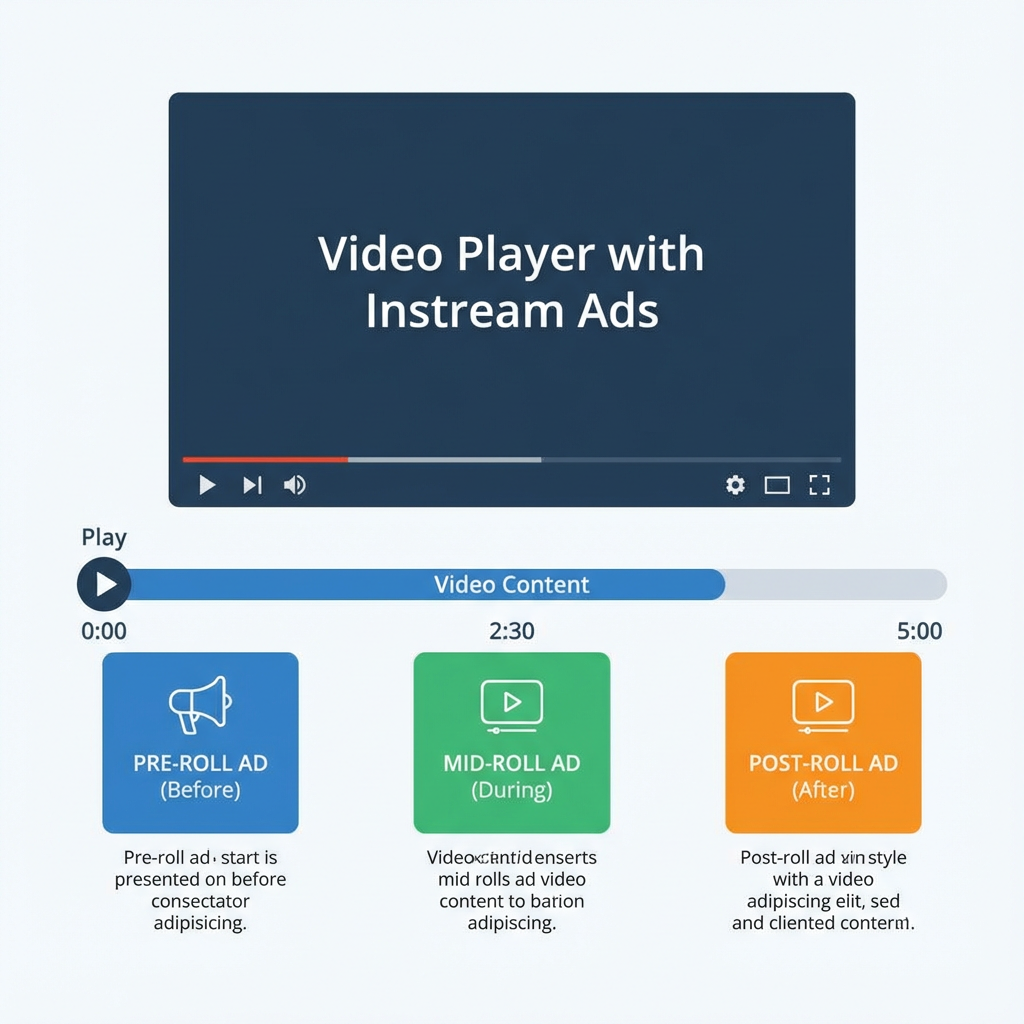
Pre-roll Ads
Pre-roll ads appear before the main video content begins playing. These ads typically run for 15-30 seconds and are considered the most valuable instream inventory due to guaranteed viewability.
Best Practices for Pre-roll:
- Keep duration under 30 seconds for optimal completion rates
- Ensure fast loading times to prevent user abandonment
- A/B test skippable vs. non-skippable formats
- Monitor completion rates and adjust frequency capping accordingly
Mid-roll Ads
Mid-roll ads interrupt video content at natural break points, similar to traditional television commercial breaks. These ads work best with longer-form content (typically 8+ minutes) and can significantly increase overall ad revenue.
Implementation Considerations:
- Insert at logical content breaks to minimize user frustration
- Use VMAP (Video Multiple Ad Playlist) for precise ad break timing
- Consider content genre and pacing when placing mid-roll breaks
- Implement smooth transitions back to content
Post-roll Ads
Post-roll ads play after the main content concludes. While they typically have lower completion rates than pre-roll and mid-roll, they can provide additional revenue without interrupting the core content experience.
Optimization Strategies:
- Keep post-roll ads brief (15 seconds or less)
- Consider using them for related content promotion
- Implement compelling calls-to-action
- Monitor drop-off rates and adjust accordingly
Ad Pods: Maximizing Revenue Opportunities
Ad pods represent multiple advertisements played in sequence during a single ad break. This format mimics traditional television advertising and can significantly increase revenue per ad opportunity.
Ad Pod Configuration
Optimal Pod Length:
- Pre-roll pods: 1-2 ads (15-60 seconds total)
- Mid-roll pods: 2-4 ads (30-120 seconds total)
- Balance revenue potential with user experience
Sequencing Strategies:
- Start with premium brand advertisers
- Use shorter ads at the beginning of pods
- End with strong call-to-action focused creative
- Implement competitive separation rules
Technical Implementation
Implementing ad pods requires careful technical planning:
<vmap:AdBreak timeOffset="00:05:00" breakType="linear" breakId="midroll-1">
  <vmap:AdSource id="pod-source" allowMultipleAds="true" followRedirects="true">
    <vmap:AdTagURI><![CDATA[https://ad-server.com/pod-request]]></vmap:AdTagURI>
  </vmap:AdSource>
</vmap:AdBreak>
Technical Standards and Implementation
VAST Integration
Video Ad Serving Template (VAST) serves as the foundation for instream ad delivery. Proper VAST implementation ensures compatibility across different ad servers and demand sources.
VAST Implementation Checklist:
- Support VAST 3.0 or higher for maximum compatibility
- Implement proper error handling and fallback mechanisms
- Ensure accurate event tracking (impressions, quartiles, completion)
- Test across multiple browsers and devices
- Validate VAST responses for compliance
VPAID Considerations
Video Player-Ad Interface Definition (VPAID) enables interactive ad experiences within instream placements. While powerful, VPAID requires careful implementation to avoid performance issues.
VPAID Best Practices:
- Set reasonable timeout limits (10-15 seconds)
- Implement VPAID fallback to linear VAST
- Monitor loading performance and user experience metrics
- Test interactive elements across different devices
Advanced Video Player Integration
Modern video players like Veedmo offer sophisticated instream advertising capabilities, including advanced ad scheduling, real-time bidding integration, and comprehensive analytics. These solutions provide publishers with the technical infrastructure needed to maximize instream ad revenue while maintaining optimal user experiences.
Programmatic Instream Advertising
Real-Time Bidding Integration
Programmatic buying has transformed instream advertising, enabling real-time competition for video inventory that drives up CPMs and improves fill rates.
Key Integration Points:
- Header bidding for video to maximize competition
- Server-side ad insertion for improved performance
- First-price auction mechanics
- Brand safety and content categorization
Demand Partner Optimization
Diversifying Demand Sources:
- Integrate multiple SSPs and ad exchanges
- Include direct advertiser relationships
- Implement private marketplace deals
- Monitor performance by demand source
Yield Optimization Strategies:
- A/B test different auction timeouts
- Implement dynamic price floors
- Use audience data for premium targeting
- Monitor and optimize by time of day, device, and geography
User Experience and Ad Frequency
Balancing Revenue and Experience
Successful instream monetization requires finding the optimal balance between ad revenue and user satisfaction.
Frequency Management:
- Implement session-based frequency capping
- Monitor user engagement metrics post-ad exposure
- Adjust ad load based on content length and type
- Use progressive ad loading strategies
User Experience Metrics:
- Video completion rates
- Session duration and depth
- Return visitor rates
- Ad completion and skip rates
Mobile-Specific Considerations
Mobile video consumption requires tailored instream advertising approaches:
- Shorter ad durations (15 seconds optimal)
- Touch-friendly interactive elements
- Bandwidth-conscious creative delivery
- Vertical video format support
- App-specific tracking and attribution
Measurement and Optimization
Key Performance Indicators
Revenue Metrics:
- eCPM by ad position and format
- Fill rate across different demand sources
- Revenue per thousand video views (RPM)
- Average revenue per user (ARPU)
Engagement Metrics:
- Ad completion rates by position
- Skip rates and skip timing
- Click-through rates
- Viewability scores
Technical Performance:
- Ad load times and timeouts
- Error rates by demand source
- Video start failures
- Cross-device compatibility metrics
Analytics Implementation
Properly tracking instream ad performance requires comprehensive analytics:
// Example tracking implementation
player.on('adstart', function(event) {
  analytics.track('Ad Started', {
    adPosition: event.adPosition,
    adDuration: event.adDuration,
    demandSource: event.demandSource
  });
});

player.on('adcomplete', function(event) {
  analytics.track('Ad Completed', {
    completionRate: event.completionRate,
    revenue: event.estimatedRevenue
  });
});
Advanced Monetization Strategies
Dynamic Ad Insertion
Server-side ad insertion enables more sophisticated instream advertising approaches:
- Personalized ad experiences at scale
- Improved ad blocking resistance
- Seamless quality transitions
- Advanced audience targeting capabilities
Cross-Platform Optimization
Modern publishers must optimize instream advertising across multiple platforms:
Connected TV (CTV):
- Longer ad formats (30-60 seconds)
- Premium brand advertiser focus
- Household-level targeting
- Advanced measurement capabilities
Mobile Applications:
- Rewarded video integration
- Native ad format adoption
- Location-based targeting
- App store optimization considerations
Seasonal and Event-Based Optimization
Instream ad revenue often fluctuates based on seasonal factors and major events:
- Adjust ad frequency during high-CPM periods
- Create event-specific ad inventory packages
- Implement surge pricing strategies
- Plan inventory allocation for guaranteed campaigns
Future Trends and Considerations
Emerging Technologies
Interactive Ad Formats:
- Shoppable video ads
- Augmented reality integration
- Voice-activated interactions
- Second-screen companion experiences
Advanced Targeting:
- AI-powered content analysis
- Real-time emotion detection
- Cross-device identity resolution
- Privacy-compliant audience building
Privacy and Regulation
Evolving privacy regulations impact instream advertising strategies:
- First-party data prioritization
- Contextual targeting advancement
- Consent management integration
- Privacy-compliant measurement solutions
Implementation Roadmap
Phase 1: Foundation Building
- Implement VAST-compliant video player
- Establish basic pre-roll monetization
- Set up analytics and performance tracking
- Integrate with primary demand partners
Phase 2: Optimization and Expansion
- Add mid-roll and ad pod capabilities
- Implement header bidding for video
- Optimize for mobile and cross-device experiences
- Enhance user experience monitoring
Phase 3: Advanced Monetization
- Deploy server-side ad insertion
- Implement advanced targeting and personalization
- Expand to CTV and emerging platforms
- Develop direct advertiser relationships
Conclusion
Instream advertising represents a significant revenue opportunity for publishers willing to invest in proper implementation and optimization. Success requires balancing technical excellence, user experience considerations, and continuous performance optimization.
By following the strategies outlined in this guide, publishers can build sustainable instream advertising operations that generate substantial revenue while maintaining positive user relationships. The key lies in starting with solid technical foundations and continuously iterating based on performance data and user feedback.
As the digital video landscape continues to evolve, publishers who master instream advertising will be best positioned to capitalize on the growing shift toward video-first content consumption and the premium advertising opportunities it creates.