FAST TV: Complete Guide to Free Ad-Supported Television for Publishers
Free Ad-Supported Television (FAST) has emerged as one of the most significant growth areas in digital video, representing a fundamental shift in how audiences consume content and how publishers monetize their video inventory. This comprehensive guide explores everything publishers and ad ops professionals need to know about FAST TV channels, from implementation strategies to monetization best practices.
What is FAST TV?
FAST TV refers to streaming television services that offer free content to viewers in exchange for watching advertisements. Unlike traditional subscription-based streaming services, FAST channels generate revenue entirely through advertising, making them accessible to viewers without monthly fees while providing publishers with new monetization opportunities.
FAST channels typically feature linear programming schedules similar to traditional television, but delivered over internet connections. This hybrid approach combines the familiar experience of channel surfing with the flexibility of on-demand streaming, creating a unique value proposition for both viewers and advertisers.
Key Characteristics of FAST TV
- Linear Programming: Scheduled content that viewers watch in real-time
- Ad-Supported Model: Revenue generated exclusively through advertising
- Free Access: No subscription fees for viewers
- Internet Delivery: Streamed over broadband connections
- Channel-Based Structure: Organized into themed channels rather than on-demand libraries
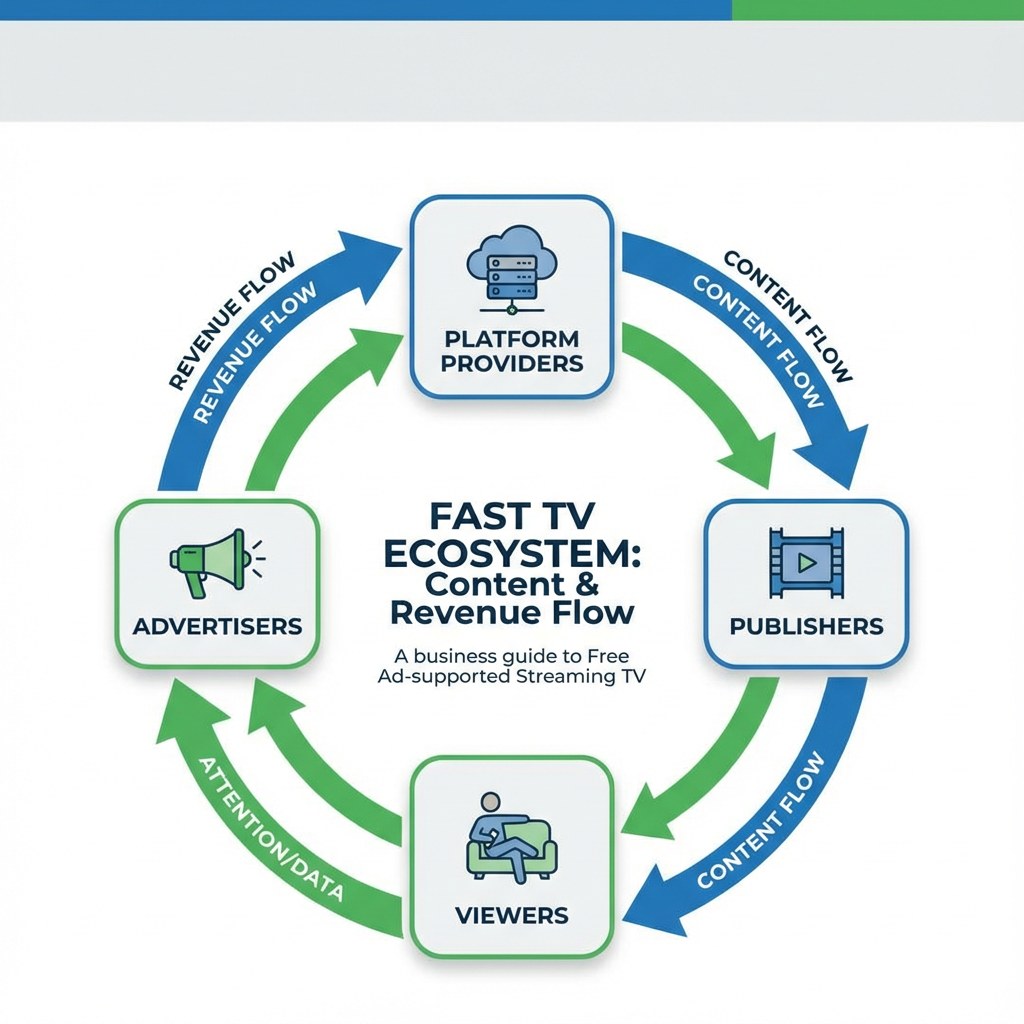
The FAST TV Ecosystem
The FAST ecosystem involves multiple stakeholders, each playing crucial roles in content delivery and monetization. Understanding these relationships is essential for publishers looking to enter this space.
Platform Providers
Major FAST platforms include Samsung TV Plus, LG Channels, Roku Channel, Pluto TV, Tubi, and Crackle. These platforms aggregate FAST channels and distribute them to viewers through smart TVs, streaming devices, and mobile applications. Each platform has specific technical requirements, content guidelines, and revenue-sharing models that publishers must navigate.
Content Providers and Publishers
Publishers supply the video content that forms FAST channels. This includes traditional broadcasters repurposing existing content, digital-first publishers creating new programming, and content aggregators licensing material from multiple sources. Success in FAST requires understanding audience preferences, programming strategies, and technical implementation requirements.
Technology Partners
Various technology providers support FAST operations, including content management systems, video encoding services, and ad insertion platforms. For publishers seeking comprehensive video solutions, platforms like Veedmo offer integrated video player technologies that can support FAST channel development and monetization strategies.
FAST TV Monetization Strategies
Effective monetization in FAST TV requires sophisticated advertising strategies that balance viewer experience with revenue optimization. Publishers must implement multiple ad formats and targeting approaches to maximize earnings.
Pre-Roll Advertising
Pre-roll ads appear before content begins and represent the most straightforward FAST monetization approach. These ads typically run 15-30 seconds and achieve high completion rates due to viewers’ commitment to watching scheduled programming. Publishers should optimize pre-roll frequency to avoid viewer fatigue while maximizing revenue opportunities.
Mid-Roll Ad Insertion
Mid-roll advertisements interrupt content at natural break points, similar to traditional television commercial breaks. Strategic placement of mid-roll ads requires careful content analysis to identify optimal insertion points that maintain viewing engagement while providing sufficient advertising inventory.
Ad Pod Optimization
Ad pods represent groups of advertisements shown together during commercial breaks. Effective pod management involves balancing pod length, ad variety, and frequency to optimize both viewer retention and advertiser value. Publishers should experiment with different pod configurations to identify optimal arrangements for their specific content and audience.
Programmatic Integration
Programmatic advertising enables automated ad buying and selling, crucial for scaling FAST channel monetization. Publishers must implement robust programmatic integrations supporting real-time bidding, audience targeting, and dynamic ad insertion. This requires technical infrastructure capable of handling high-volume ad requests with minimal latency.
Technical Implementation Requirements
Successful FAST channel deployment requires sophisticated technical infrastructure supporting content delivery, ad insertion, and audience measurement. Publishers must address multiple technical challenges to ensure reliable service delivery.
Video Ad Serving Template (VAST) Compliance
VAST compliance is essential for FAST channels, enabling standardized communication between ad servers and video players. Publishers must ensure their infrastructure supports current VAST specifications, including proper error handling, tracking pixel implementation, and creative format compatibility.
Server-Side Ad Insertion (SSAI)
SSAI technology enables seamless ad integration by combining content and advertisements at the server level before delivery to viewers. This approach prevents ad blocking, reduces buffering, and provides consistent viewing experiences across devices. SSAI implementation requires significant technical expertise and infrastructure investment.
Content Delivery Network (CDN) Optimization
FAST channels require robust CDN infrastructure to deliver high-quality video streams to global audiences. Publishers must optimize CDN configurations for both content delivery and ad insertion, ensuring minimal latency and maximum reliability across different geographic regions and device types.
Analytics and Measurement
Comprehensive analytics systems are crucial for FAST channel optimization. Publishers need detailed insights into viewership patterns, ad performance, and revenue metrics. This requires implementing multiple tracking systems and ensuring data accuracy across different platforms and devices.
Content Strategy for FAST Channels
Successful FAST channels require strategic content planning that balances audience engagement with advertiser value. Publishers must develop programming strategies that support sustainable growth and monetization.
Niche Channel Development
Focused, niche channels often outperform broad-appeal programming in FAST environments. Publishers should identify specific audience segments and develop targeted content strategies that attract engaged viewers while providing valuable targeting opportunities for advertisers.
Content Licensing and Rights Management
FAST channel operators must navigate complex content licensing requirements, ensuring proper rights clearance for streaming distribution and advertising integration. This includes understanding territorial restrictions, content modification rights, and revenue-sharing obligations.
Programming Schedule Optimization
Effective programming schedules balance content variety with audience retention. Publishers should analyze viewing patterns to optimize content rotation, identify peak viewing periods, and schedule high-value content during maximum audience availability.
Audience Development and Retention
Building sustainable FAST channel audiences requires understanding viewer behavior and implementing retention strategies that support long-term growth.
Cross-Platform Promotion
Successful FAST channels leverage multiple distribution platforms to maximize audience reach. Publishers should develop platform-specific promotion strategies while maintaining consistent brand messaging and content quality across different environments.
Social Media Integration
Social media platforms provide valuable promotion opportunities for FAST channels. Publishers can use social content to preview programming, engage with audiences, and drive traffic to their channels. This requires coordinated content strategies that support both social engagement and channel viewing.
Community Building
Developing viewer communities around FAST channels creates valuable engagement opportunities and supports audience retention. Publishers should implement community features, respond to viewer feedback, and create content that encourages audience participation and loyalty.
Advertising Best Practices for FAST TV
Optimizing advertising performance in FAST environments requires understanding unique viewer behaviors and implementing strategies that balance revenue generation with viewer satisfaction.
Frequency Capping
Proper frequency capping prevents advertisement overexposure while maximizing revenue opportunities. Publishers should implement sophisticated frequency management systems that track ad exposure across viewing sessions and optimize delivery based on viewer behavior patterns.
Creative Optimization
FAST advertising creative should be optimized for television viewing experiences while supporting interactive elements when appropriate. Publishers should work with advertisers to develop engaging creative content that performs well in linear viewing environments.
Targeting and Personalization
Advanced targeting capabilities distinguish FAST advertising from traditional television. Publishers should implement data collection and audience segmentation strategies that support precise targeting while respecting privacy regulations and viewer preferences.
Future Trends and Opportunities
The FAST TV landscape continues evolving rapidly, with new technologies and market dynamics creating opportunities for innovative publishers.
Connected TV Integration
Connected TV advertising represents the fastest-growing segment of digital advertising, with FAST channels positioned to capture significant market share. Publishers should develop CTV-specific strategies that leverage the unique advantages of television-based viewing experiences.
Interactive Advertising Evolution
Emerging interactive advertising formats provide new engagement opportunities for FAST channels. Publishers should explore interactive capabilities while ensuring compatibility with their technical infrastructure and audience preferences.
Global Expansion Opportunities
FAST TV adoption varies significantly across global markets, creating expansion opportunities for successful channel operators. Publishers should research international markets and develop localization strategies that support global growth while respecting local regulations and cultural preferences.
Conclusion
FAST TV represents a transformative opportunity for publishers willing to invest in the technical infrastructure and content strategies necessary for success. By understanding the unique requirements of ad-supported streaming television and implementing comprehensive monetization strategies, publishers can build sustainable businesses that serve both viewer and advertiser needs.
Success in FAST requires balancing multiple priorities: creating engaging content, implementing sophisticated advertising technology, building loyal audiences, and maintaining technical reliability. Publishers who master these elements while staying current with industry developments will be best positioned to capitalize on the continued growth of free ad-supported television.
The FAST TV ecosystem will continue evolving as new technologies emerge and viewer preferences shift. Publishers should maintain flexibility in their strategies while building strong foundational capabilities that support long-term growth and adaptation to changing market conditions.