What are Peacock Fast Channels?
Peacock Fast Channels represent NBCUniversal’s strategic entry into the Free Ad-Supported Television (FAST) ecosystem, offering publishers and content creators valuable insights into how premium media companies are monetizing linear-style streaming content. As FAST channels continue to reshape the streaming landscape, understanding Peacock’s approach provides publishers with a blueprint for implementing similar monetization strategies.
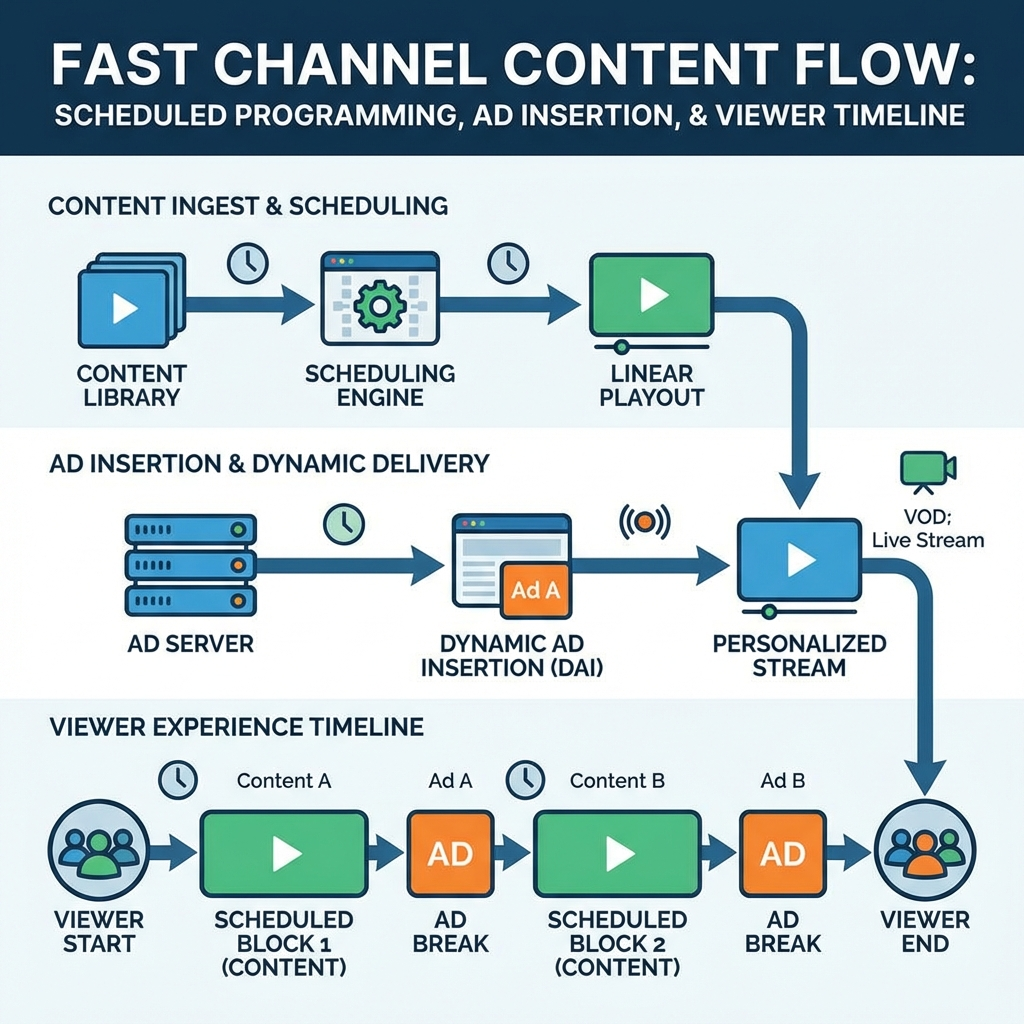
FAST channels simulate traditional television programming by delivering scheduled, linear content streams supported entirely by advertising revenue. Peacock’s implementation demonstrates how publishers can leverage this format to create consistent viewing experiences while maximizing ad inventory opportunities.
The FAST Channel Revolution in Streaming
The FAST market has experienced explosive growth, with industry analysts projecting the sector will reach $12 billion in revenue by 2027. Peacock’s fast channels capitalize on this trend by offering viewers familiar television-like experiences without subscription barriers, while providing advertisers with premium inventory at scale.
Key Characteristics of FAST Channels
FAST channels operate on several fundamental principles that publishers should understand:
- Linear Programming: Content follows predetermined schedules, mimicking traditional broadcast television
- Ad-Supported Model: Revenue generation relies entirely on advertising, with no subscription fees
- Curated Content: Channels feature themed programming blocks to attract specific audience segments
- Consistent Availability: 24/7 streaming ensures continuous ad inventory opportunities
Peacock’s FAST Channel Strategy
Peacock has developed an extensive FAST channel lineup featuring both original programming and licensed content across multiple genres. Their approach demonstrates several best practices for publishers considering FAST implementation:
Content Curation and Channel Themes
Peacock organizes fast channels around specific themes and franchises:
- NBC News Now: 24/7 news programming leveraging NBC’s journalism resources
- Classic TV Channels: Dedicated streams for popular series like “The Office” and “Parks and Recreation”
- Genre-Specific Channels: Comedy, drama, reality, and sports-focused programming blocks
- Seasonal Programming: Holiday-themed channels and event-driven content
This thematic approach allows publishers to create targeted advertising opportunities while building loyal audience segments.
Technical Infrastructure Requirements
Implementing FAST channels requires robust technical infrastructure similar to Peacock’s implementation:
- Content Delivery Networks (CDN): Ensuring reliable, low-latency streaming globally
- Ad Insertion Technology: Server-side ad insertion (SSAI) capabilities for seamless ad experiences
- Programmatic Integration: Automated ad buying and selling through demand-side platforms
- Analytics and Measurement: Comprehensive viewership and ad performance tracking
Monetization Strategies for FAST Channels
Ad Format Implementation
Peacock fast channels utilize various advertising formats that publishers can adapt:
Pre-roll Advertisements Pre-roll ads appear before content begins, typically lasting 15-30 seconds. Peacock implements pre-roll strategically at natural viewing entry points, maximizing completion rates while minimizing viewer friction.
Mid-roll Ad Breaks Mid-roll advertisements interrupt programming at predetermined intervals, similar to traditional television commercial breaks. Peacock schedules these breaks every 8-12 minutes, balancing revenue generation with viewer experience.
Ad Pod Optimization Ad pods containing multiple sequential advertisements allow publishers to maximize revenue per break. Peacock typically implements 2-4 ads per pod, with total break durations ranging from 90 seconds to 3 minutes.
Programmatic Advertising Integration
Peacock leverages programmatic advertising to automate ad sales and optimize revenue:
- Real-time Bidding: Automated auction systems determine ad placement and pricing
- Audience Targeting: Advanced demographic and behavioral targeting capabilities
- Yield Optimization: Dynamic pricing based on inventory availability and demand
- Cross-platform Integration: Unified advertising across FAST channels and other Peacock content
Technical Implementation Considerations
Server-Side Ad Insertion (SSAI)
SSAI technology enables seamless ad delivery within FAST channels by:
- Eliminating Ad Blockers: Ads are inserted at the server level, bypassing browser-based ad blocking
- Consistent Quality: Matching ad quality to content stream specifications
- Reduced Buffering: Minimizing playback interruptions during ad transitions
- Enhanced Tracking: Improved measurement accuracy for both content and advertising metrics
Video Player Integration
Publishers implementing FAST channels require sophisticated video players capable of handling linear streaming with integrated advertising. Modern solutions like Veedmo provide the technical foundation necessary for FAST channel deployment, offering seamless ad insertion and comprehensive analytics capabilities.
Content Management Systems
FAST channel operation requires specialized content management:
- Programming Schedules: Automated content scheduling and playlist management
- Metadata Management: Comprehensive content tagging for advertising targeting
- Rights Management: Ensuring content licensing compliance across all programming
- Quality Assurance: Automated monitoring for technical issues and content standards
Revenue Optimization Strategies
Audience Segmentation
Peacock’s success demonstrates the importance of audience segmentation for FAST channel monetization:
Demographic Targeting
- Age-based programming blocks
- Gender-specific content themes
- Geographic content localization
- Income and education-based targeting
Behavioral Targeting
- Viewing history analysis
- Content preference modeling
- Engagement pattern recognition
- Cross-platform viewing behavior
Dynamic Ad Insertion
Dynamic ad insertion allows publishers to optimize revenue by:
- Real-time Optimization: Adjusting ad selection based on current market conditions
- Personalized Advertising: Delivering targeted ads to individual viewers
- Geographic Customization: Localizing advertisements based on viewer location
- Inventory Management: Maximizing fill rates and minimizing unsold inventory
Industry Best Practices from Peacock’s Implementation
Content Strategy Development
Successful FAST channels require strategic content planning:
- Audience Research: Understanding target demographics and viewing preferences
- Content Licensing: Securing appropriate rights for linear streaming distribution
- Programming Blocks: Creating themed content groupings to build audience habits
- Refresh Cycles: Regularly updating content to maintain viewer engagement
Advertising Standards and Quality
Peacock maintains high advertising standards that publishers should emulate:
- Ad Quality Guidelines: Ensuring advertisements meet technical and content standards
- Frequency Capping: Limiting repetitive ad exposure to maintain viewer satisfaction
- Brand Safety: Implementing content verification to protect advertiser interests
- Compliance Monitoring: Adhering to industry regulations and platform policies
Measuring Success in FAST Channel Operations
Key Performance Indicators (KPIs)
Publishers should track metrics similar to those used by Peacock:
Viewership Metrics
- Average viewing duration
- Channel retention rates
- Peak viewing periods
- Audience growth trends
Revenue Metrics
- Effective cost per mille (eCPM)
- Fill rates for ad inventory
- Revenue per viewer hour
- Advertiser retention rates
Technical Performance
- Stream quality and reliability
- Ad completion rates
- Buffering and error rates
- Platform compatibility metrics
Analytics and Reporting
Comprehensive analytics enable data-driven optimization:
- Real-time Monitoring: Continuous tracking of viewership and technical performance
- Audience Insights: Detailed demographic and behavioral analysis
- Ad Performance: Granular advertising effectiveness measurement
- Revenue Attribution: Tracking revenue sources and optimization opportunities
Future Trends and Opportunities
Interactive Advertising Integration
Emerging interactive advertising formats offer new monetization opportunities:
- Shoppable Ads: Direct e-commerce integration within ad experiences
- Clickable Overlays: Interactive elements during programming
- Social Media Integration: Cross-platform engagement opportunities
- Gamified Advertising: Interactive ad experiences that engage viewers
Advanced Targeting Capabilities
Future FAST channel implementations will leverage:
- Artificial Intelligence: Machine learning-driven content and ad optimization
- Cross-device Tracking: Unified audience profiles across multiple platforms
- Contextual Advertising: Content-aware ad placement optimization
- Privacy-compliant Targeting: Cookieless advertising solutions
Conclusion
Peacock’s fast channels demonstrate the significant opportunities available in the FAST ecosystem for publishers willing to invest in proper technical infrastructure and content strategy. By understanding Peacock’s approach to channel curation, advertising integration, and audience engagement, publishers can develop their own successful FAST channel implementations.
The key to success lies in balancing viewer experience with revenue optimization, leveraging programmatic advertising capabilities, and maintaining high-quality content standards. As the FAST market continues expanding, publishers who implement these strategies effectively will be well-positioned to capture their share of this growing revenue opportunity.
Success in FAST channels requires ongoing optimization, continuous audience analysis, and adaptation to evolving advertising technologies. Publishers should focus on building scalable technical infrastructure, developing compelling content strategies, and maintaining strong relationships with advertising partners to maximize their FAST channel potential.